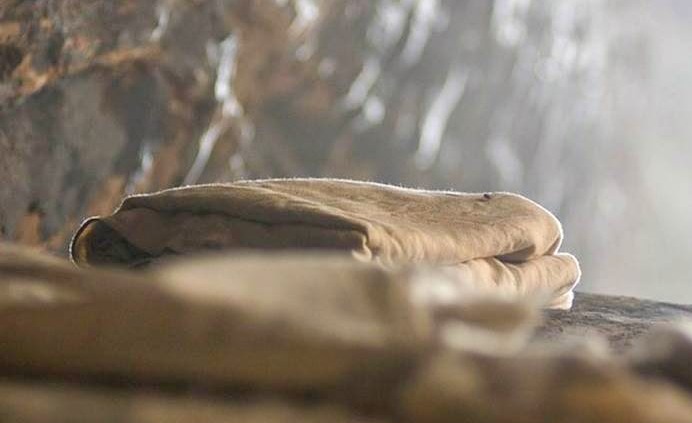
Have you ever opened a gift only to find another box inside? The gospel story works like that. After the manger and the ministry, there’s one more wrapping: the linen of burial. For a moment, it feels as though the gift is gone, sealed in darkness. But Easter morning changes everything. The grave cloths are folded, the stone rolled away, and the greatest unveiling begins – the resurrection. This is the moment when death itself is unwrapped, and unstoppable hope is revealed.
The story that began with swaddling cloths does not end with them. The Child who was wrapped and presented in a manger is, years later, wrapped again, this time in linen for burial. Between those two wrappings stretches a life that steadily unveiled the Kingdom through teaching, table fellowship, miracles, and mercy. But now we arrive at the sharp edge of the gospel: death, burial, and resurrection, the great and final unwrapping where God folds away the last enemy and unveils new creation.
This third post completes our series: from manger to mission, from wrapping to revelation, from cloths of comfort to cloths of victory. Here, we listen closely to the sound of stone rolled away and linen left behind. We hear the rustle of grave cloths becoming evidence of triumph. And we consider what this means for envoys who carry resurrection hope into a world still haunted by shadows.
Wrapped in Death
The Gospels spare neither the horror nor the holiness of the crucifixion. Jesus truly died by Roman execution, under public shame, bearing the weight of sin and the sting of curse. After His death, Joseph of Arimathea asked Pilate for the body and, with Nicodemus, wrapped Jesus in linen and spices according to Jewish custom. These details matter. They assert the reality of death. No fainting spell, no metaphor. The Word made flesh embraced mortality fully, down to the wrapping of the dead. The One swaddled in infancy is now shrouded in death.
For envoys, the burial tells us the Kingdom does not skirt pain; it enters it. The mission does not pretend suffering is inconsequential; it testifies that suffering is not sovereign. Linen around the lifeless Christ is solemn, yes, but it is also provisional. Burial cloths are not destiny; they are stage props awaiting the Director’s final act.
The Unwrapping at Dawn
Easter morning is the cosmic unwrapping. Mary Magdalene comes while it is still dark. Peter and John run to the tomb and find the linen lying there, the face cloth folded neatly by itself. Even the arrangement of the linens preaches: this is not chaos or theft; this is victory with order. Death was never in control. Victory has won.
This is more than reversal; it is revelation. God’s new creation has breached our old world. The same Jesus, scarred yet glorified, appears, speaks peace, eats fish, opens minds, and commissions His followers. He is not less human. He is more. He is fully alive and the prototype of human destiny in God’s Kingdom.
For envoys, this is the heart of our dispatch: we are people of folded grave cloths. We do not deny sorrow; we announce the end of its reign. We do not minimize death; we proclaim its defeat. Resurrection is not a private miracle; it is public policy for the universe under Christ’s reign.
From Ascension to Pentecost
Scripture calls the ascension an enthronement. The risen Christ is seated at the right hand of the Father, filling all things. He is not absent so much as present differently, no longer limited to one place, but Lord over every place. Pentecost continues the pattern. The Spirit comes as wind and fire unwrapping the gospel to the nations. If Christmas is God wrapped in flesh, Pentecost is God wrapped in the church. The Spirit clothes believers with power, turning them into envoys of the unveiling, people whose words and deeds pull away layers of despair to reveal Jesus alive.
The story’s rhythm is clear:
Jesus’ Swaddling: God near, gentled for our fragility.
Jesus’ Ministry: God unveiling His reign through mercy and truth.
Jesus’ Burial: God entering the depth of human finality.
Jesus’ Resurrection: God removing the last ribbon and revealing the gift of salvation by grace.
Jesus’ Ascension and Pentecost: God present by the Spirit, sending the church to join the unwrapping until all things are made new.
Living the Unwrapped Life
Resurrection does not erase scars; it reinterprets them. Jesus shows His wounds as proof. Likewise, our stories of healing carry marks of what was but those marks now magnify mercy rather than misery. Where bitterness once strangled us, forgiveness fills our lungs with fresh air. Where addiction owned the future, sobriety becomes a testimony. Where fear dictated choices, courage steps forward. Where indifference ruled, compassion awakens. Where cynicism dominated, worship rises because Christ is risen.
Envoys embody this hope in ordinary ways: folding the cloths by finishing small tasks with care; speaking Easter in rooms of loss; hosting tables where stories of grace are shared; working for justice that restores dignity; praying daily for Spirit-clothed courage. Every act becomes a tug at the ribbon of despair, revealing the brightness of Christ.
That is the unwrapped life!

Leave a Reply